

Opening doors for everyone!

Case Study -
Abergavenny Castle
Destination For All
Abergavenny Castle & Museum is one of the town’s most important historic destinations, combining centuries of heritage with a museum that tells the wider story of Abergavenny, its landscape and its people.
As part of Monmouthshire County Council’s Destination for All initiative, ANI created an immersive digital twin designed to give visitors the opportunity to explore and understand the site before they arrive.
Importantly, the Castle & Museum does not sit in digital isolation. Its immersive experience sits alongside the wider Abergavenny town digital twin, connecting one of the town’s most significant heritage attractions with the streets, businesses, attractions and stories that surround it.

Challenges
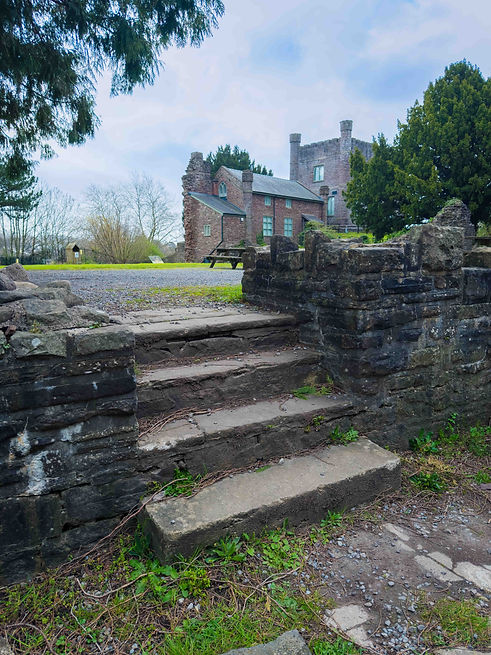
Historic destinations naturally present accessibility challenges. Uneven surfaces, changes in level, steps and protected structures can make physical alterations difficult or, in some cases, impossible.
For visitors with accessibility requirements, simply knowing these challenges exist is often not enough. They need to understand what the environment actually looks like, where barriers occur, what alternative access may be available and what they can expect when they arrive.
The challenge was therefore not to change the history of the site, but to make information about that historic environment available in a far more visual and useful way.
ANI Approach
ANI captured Abergavenny Castle & Museum as an immersive digital environment, enabling visitors to explore the destination remotely and gain a much clearer understanding of the site before travelling.
The experience provides a visual representation of the Castle, Museum and surrounding areas, while creating opportunities to layer accessibility information, visitor guidance, historical content and storytelling throughout the digital journey.
Rather than replacing the physical visit, the digital twin is designed to give people greater confidence to make one.
Supporting Accessibility
and Visitor Confidence
Accessibility starts with information.
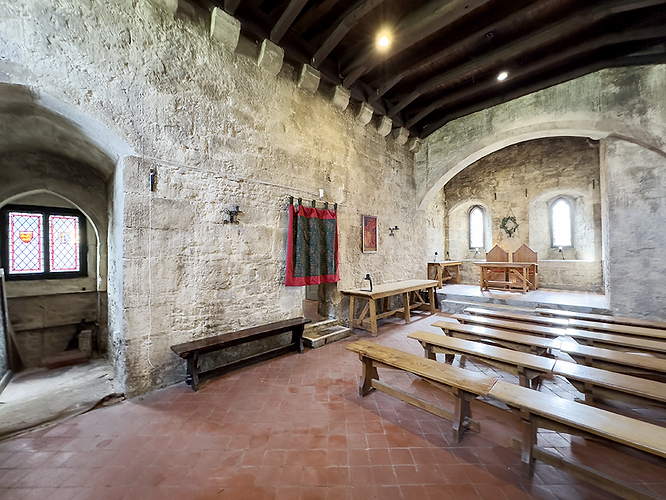
The digital twin allows visitors to familiarise themselves with entrances, routes, surfaces, changes in level, internal spaces and facilities before arriving. Where additional assistance or alternative access is available, this information can be incorporated directly into the experience.
For some visitors, this provides reassurance. For others, it allows them to make informed decisions about whether a particular area is suitable for their individual requirements.
That knowledge can transform the experience from arriving somewhere unfamiliar to arriving somewhere that already feels understood.
Connecting the Castle to Abergavenny
One of the most important aspects of the project is how the Castle & Museum sits alongside the wider Abergavenny digital twin.
A visitor discovering Abergavenny virtually can explore the town centre, learn about its history, discover independent businesses and attractions, and then continue their journey into the Castle & Museum experience.
Likewise, someone initially discovering Abergavenny through the Castle can be encouraged to explore more of the town.
This creates a connected digital visitor journey rather than a collection of isolated virtual tours.
The Castle becomes another destination within Abergavenny’s growing digital landscape, linking heritage with retail, hospitality, community, accessibility and local storytelling.
Enhancing the Town Experience
Connecting the Castle & Museum with the Abergavenny digital twin extends the value of both experiences.
A heritage visitor can discover somewhere for lunch, explore the town’s independent shops or continue into another historic location. Someone planning a day in Abergavenny can understand how the Castle fits geographically and culturally into their visit before they arrive.
It also provides an opportunity to tell stories that extend beyond the Castle walls.
Historical events, people and places can be connected back to locations within the town, creating a digital thread between Abergavenny's past and the streets visitors experience today.
Instead of the digital journey ending when someone leaves the Castle, it encourages them to continue exploring.
A Connected Destination
The Abergavenny Castle & Museum project demonstrates ANI’s wider approach to immersive technology.
A digital twin can be valuable on its own, but its potential grows when it becomes part of something larger.
By connecting individual destinations with the Abergavenny town digital twin, visitors can move between heritage, businesses, attractions, public spaces and community facilities within a single interconnected digital experience.
Each destination adds another layer. Each connection creates another reason to explore.
Abergavenny Castle & Museum therefore becomes more than a virtual representation of an historic attraction.
It becomes part of a digital gateway into Abergavenny itself, helping visitors discover the town, understand its accessibility and experience more of what the destination has to offer.
Ready to Elevate Your Marketing?
Let us help you create an enduring impact for your business. Contact us today to discuss how immersive technology can transform your marketing strategy.